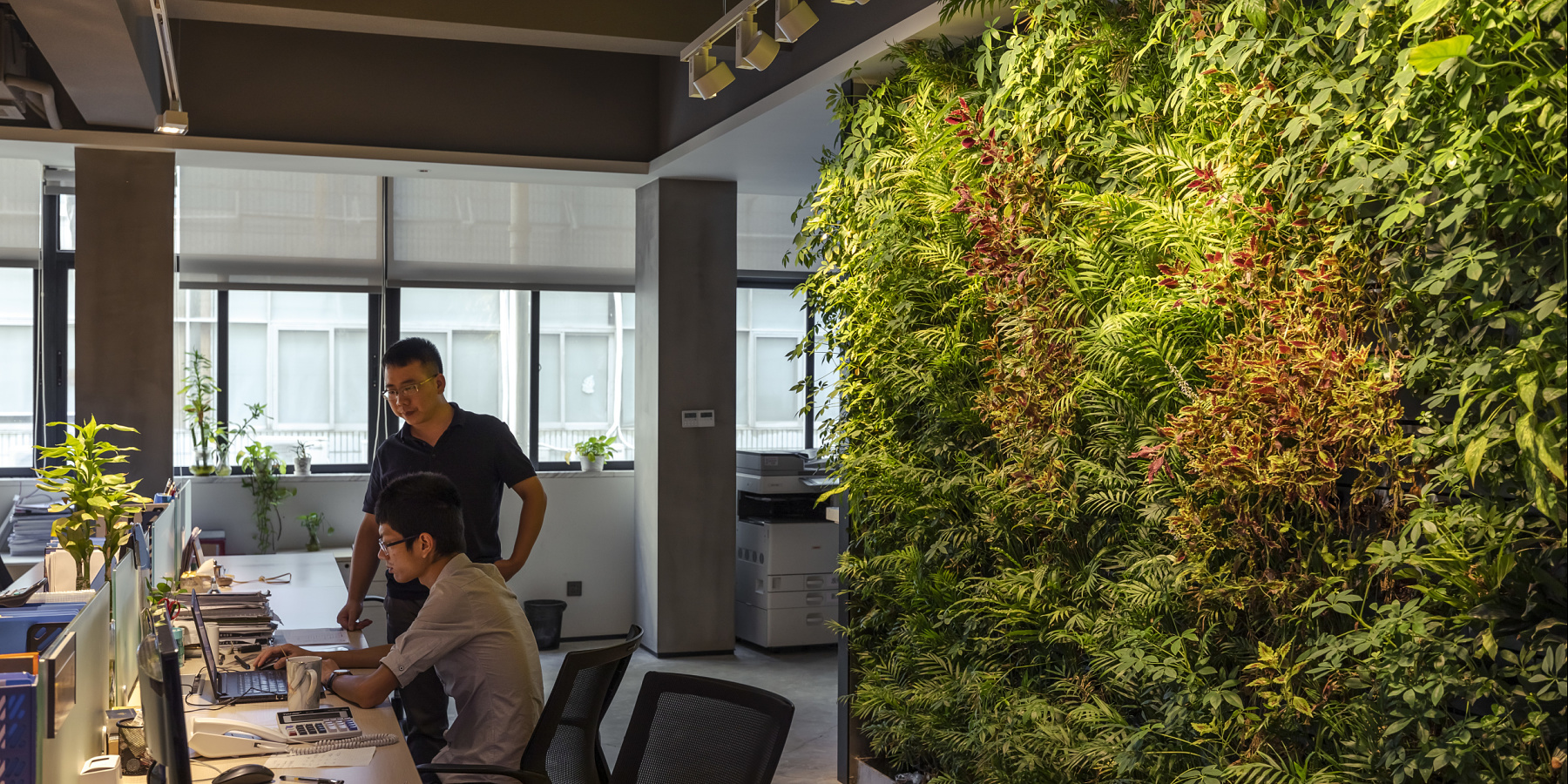
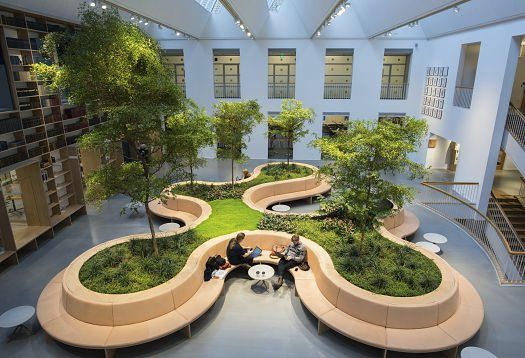
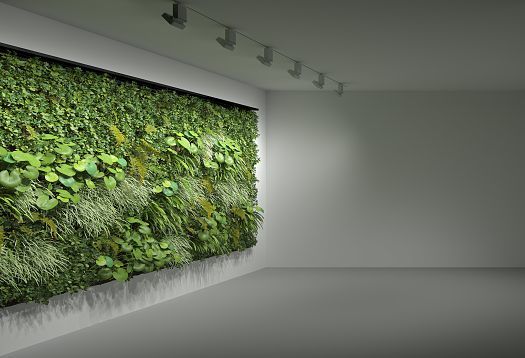
Whether in offices, reception areas, foyers or restaurants: green walls are not only the trend in interior design, but also contribute to greater well-being and a better indoor climate. With their positive effect on the indoor climate and quality of stay, they are seen as a building block towards user-oriented sustainable interior design.
Especially with vertical green walls in indoor spaces, the factor of light plays a decisive role and should be carefully included in your lighting design. Good lighting design ensures the continued health of the plants.
In this article, find out how you as an architect, interior designer or lighting designer can design optimum lighting for green walls, which steps you should pay attention to in your lighting design and which luminaires and light sources are particularly suitable.
What kind of light do plants in green walls need?
To ensure that an organic green wall thrives and is well maintained in the long term, the correct brightness and duration of lighting are of high importance in addition to a suitable light spectrum. In your project you should primarily consider the specific requirements of the plants. Although the lighting criteria for green walls differ from those of architectural lighting, there are luminaires that are ideal for both applications.
Calculating Optimum Lighting - Step 1: Determine the illuminance
Leave nothing to chance in your project, because the right light conditions are a prerequisite for healthy green walls and must be well planned. Find out the specific DLI value for the plants in your green wall and use this to determine the required illuminance. We explain all the technical terms and calculation steps in our white paper. You can use our Product Finder to select luminaires with suitable distribution and wattage.
Calculating Optimum Lighting - Step 2: Calculate the illuminance
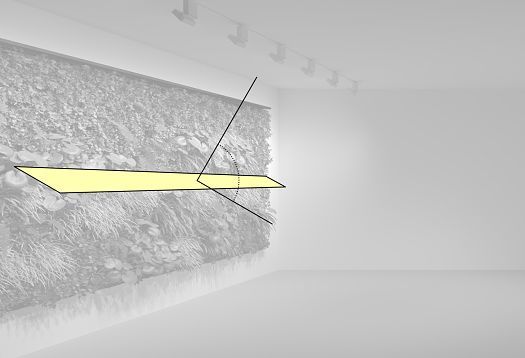
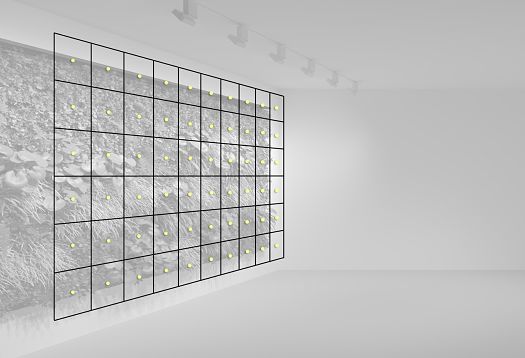
In a light calculation program, construct a horizontal measuring surface at half the height of the green wall. Then tilt this measuring surface to take into account the alignment of the leaves. Align the measuring points with the centre of the luminaire’s light emission surface, because leaves orient themselves towards maximum illuminance. To maximise the illuminance, select a higher wattage for the luminaires or reduce the luminaire spacing to obtain the target value.
Calculating Optimum Lighting - Step 3: Check the uniformity
In a light calculation program, construct a vertical calculation surface with a border area of 25cm in front of the front surface of the green wall. Then determine the vertical illuminance and calculate the uniformity from minimum to average illuminance. For uniform distribution of brightness, this value should be greater than or equal to 0.4. To optimise the uniformity, now check the light distribution. You can then increase the distance between the luminaire and the green wall or reduce the distance between the luminaires.